Things to Do during the Polar Night
“Is there really anything to do up there when it’s dark? Are the shops even open?” We get this question quite a lot. The short answer is yes, and yes. Here’s the long answer, from a hostel that lives through the polar night every year.
Text: Angie, Gjestehuset 102
Every year around October, the emails start coming in. People have found a cheap flight to Longyearbyen in November or December, they’ve read that the sun doesn’t rise, and now they’re nervous. Is the town closed? Will there be anything to do? Will they spend four days sitting in a dark room?
I understand the worry. From the outside, a town with no sunlight for two and a half months sounds like a place that shuts down and waits for spring. It does not. Around 2,500 people live here all winter, with jobs, kids, dogs, dinner plans and a surprisingly busy calendar. The shops are open. The pubs are full on Friday nights. The guides go out every single day. And the polar night itself, once you’re standing in it, is one of the most unique experiences Svalbard has to offer.
This is the guide we wish we could send to everyone who asks. What the polar night actually is, what’s open, what you can do, what to expect from the weather, and how to plan it. We’ve also written about why the dark season is worth the trip, so this one focuses on the practical side: what you’ll actually be doing from the moment the airport bus drops you off.
The short version: Longyearbyen is open all through the polar night. You can go dog sledding, hike into an ice cave, hunt the northern lights, float in the Arctic Ocean, visit a coal mine, taste beer at the world’s northernmost brewery, and still have time for a waffle. Snowmobile trips depend on snow and usually start later in the season. Scroll down for the month-by-month overview.
What the polar night actually is
Longyearbyen sits at 78° north. The further north you go, the more extreme the swings between light and dark become, and up here they go all the way: four months of midnight sun in summer, and in winter a long stretch where the sun never climbs above the horizon at all.
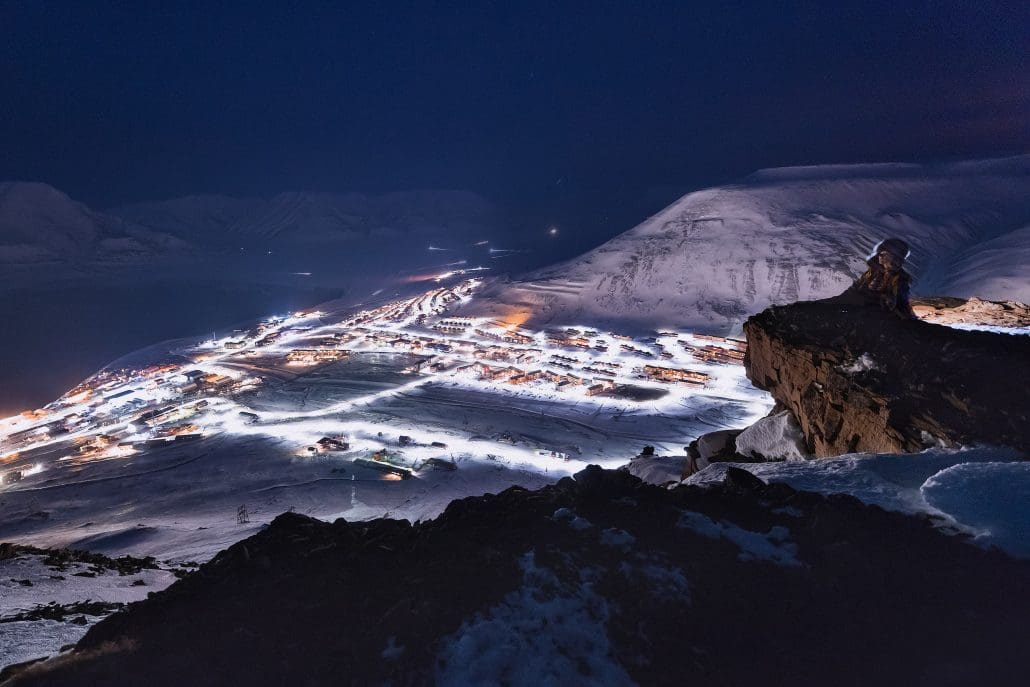
That winter stretch is the polar night. In Longyearbyen it runs from 14 November to 29 January. During those weeks, there is no daylight. None. Not a glow on the horizon at noon, not a hint of dawn. The moon, the stars, the town lights and, on good nights, the aurora are all the light there is.

Polar night, dark season, blue hour: what’s the difference?
You’ll hear all three terms, and locals use them loosely, so here’s how we think of it:
- The dark season is the whole stretch from the last sunset in late October until the sun returns in early March. It’s the season the tourist board calls “Northern Lights Winter”.
- The polar night is the core of it, 14 November to 29 January, when the sun is so far below the horizon that there is no daylight at all.
- The blue twilight is the magic on either side. From late October to mid-November, and again from the end of January into February, the sun is just below the horizon and the sky at midday turns a deep, soft blue for a couple of hours. The mountains look like they’ve been painted. Photographers plan trips around it.
If you come in late October, early November or February, you get this blue light in the middle of the day and proper darkness in the evening for aurora. If you come in December or early January, you get the full polar night. Both are wonderful. They are just different.
Is it really pitch-black 24 hours a day?
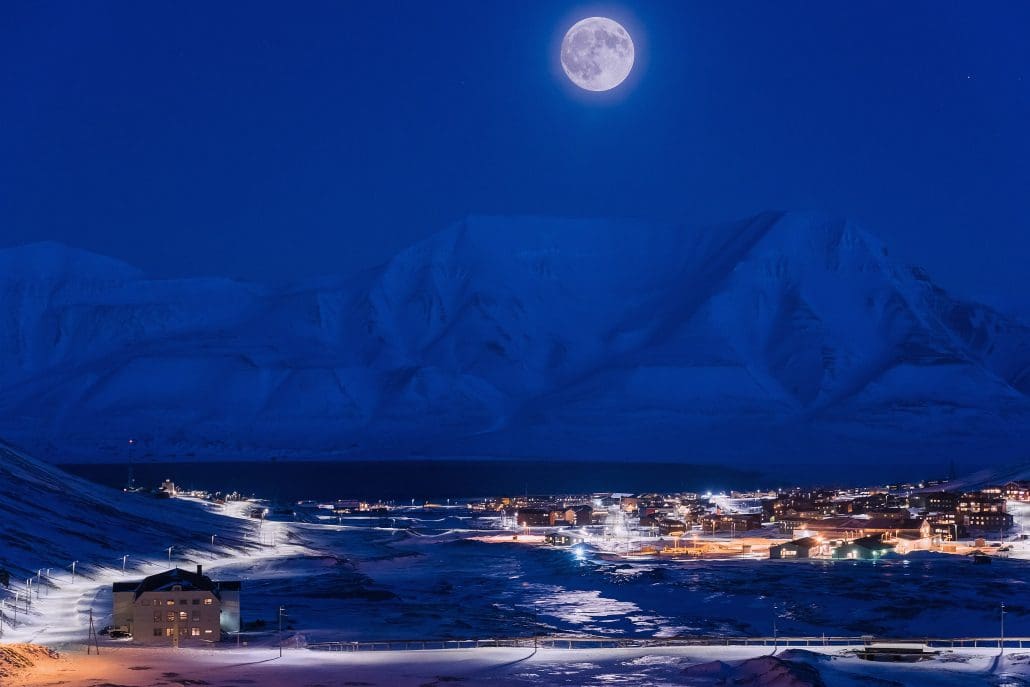
In the polar night, yes, in the sense that the sun doesn’t contribute anything. But “dark” here doesn’t mean you’re stumbling around blind. The town is well lit. Snow on the ground reflects every street light and window. A full moon over the valley is bright enough to walk by without a headlamp, and when the aurora is active, the sky glows green. Some of our guests say the polar night is brighter than they expected, which always makes us smile.
What everyday life feels like without the sun
Strange at first, then normal, then something you miss. Your body loses track of time, so clocks and routines matter more. Breakfast at a set time, a walk at “lunch”, dinner at a sensible hour. Most of us here take vitamin D, and a lot of us sleep better in winter than in the midnight sun, when the light keeps you awake.
What you notice most is the quiet. The valley goes still. On a windless night the loudest sound is your own boots in the snow, and then, maybe, the dogs howling from the kennels further up the valley. It’s the kind of quiet that’s hard to find anywhere else, and it does something to your head after a few days. People slow down.
The polar night isn’t a season to get through. It’s the season a lot of us would choose, given the choice.
Is Longyearbyen closed in the polar night? No. Here’s what’s open.
Let’s take this one head on, because it’s usually misunderstood. Longyearbyen is not a summer resort that boards up its windows in October. It’s a real town, and real towns don’t close. The school runs, the hospital runs, the post office runs, people go to work in the dark and come home in the dark, and they fill the weekends with things to do.
Cafés, restaurants and pubs
All the places you’ve read about are open through the winter: the restaurants in the centre, the pubs, the coffee places where locals meet, the pizza place, the cocktail bar. A few may have shorter hours on quiet weekdays, and some take a short break during the special holidays, but you will never struggle to find dinner. On Friday and Saturday evenings it’s worth booking a table, because the town comes out.
Our tip: make at least one evening about the food. Svalbard has a small but very good restaurant scene, with reindeer, Arctic char, seal and seaweed on the menus alongside the Thai, Filipino and Norwegian home cooking that reflects who actually lives here. See our food and drink experiences for the dinner-with-a-story options.
Shops, museums and the everyday stuff
The supermarket, the outdoor shops, the pharmacy, the library, the sports hall with its swimming pool, the cinema at Nordover: all open. Svalbard is a duty-free zone, so the outdoor gear in Longyearbyen is cheaper than on the mainland. If you forgot to bring your beanie, you will find one!
Svalbard Museum is open daily and is one of the best small museums we know, perfect for a stormy afternoon. The North Pole Expedition Museum tells the story of the airship expeditions that left from here, and Galleri Svalbard, right here in Nybyen, shows Arctic art and the old maps of the islands. Between them you can fill a whole day indoors and learn more about this place than most locals know.
Events through the dark season
For a town this size, the calendar is full. These are the regular fixtures, roughly in order:
- Dark Season Blues, late October. The world’s northernmost blues festival, held on the weekend the sun disappears. Concerts in pubs, the church and even inside an old coal mine. Programme at svalbardblues.com.
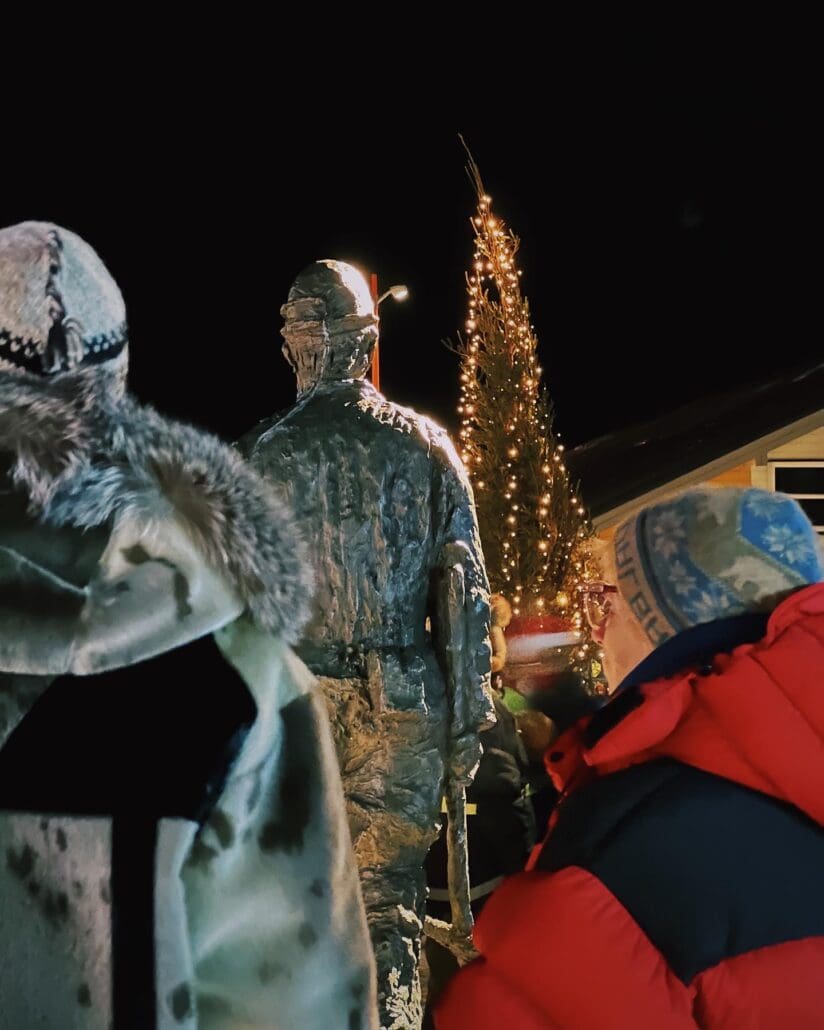
- First Sunday of Advent, 29 November in 2026. The street lights go off and the whole town walks with burning torches up to Santa’s letterbox in Nybyen, right past our door. Later the Christmas tree is lit in the square. We wrote more about it in Christmas in Longyearbyen.
- Christmas markets, early December, at Kulturhuset in town and at Galleri Svalbard in Nybyen.
- Christmas and New Year. Candles in every window, church on Christmas Eve, fireworks on the 31st, and maybe a reindeer or two wandering past the Christmas lights.
- Polarjazz, first weekend of February. The northernmost jazz festival, with local musicians and big names from Norway and abroad. polarjazz.no.
- Arctic Chamber Music Festival, February. Classical music in small venues, including concerts in the museum.
- In between: concerts, lectures, quiz nights and film evenings most weeks. Check the Visit Svalbard events calendar for your dates.

Things to do in the polar night
Now the part everyone actually wants. These are the activities we book for guests all through the dark season. For each one I’ve tried to say what it’s really like, who it suits, and when in the season it works. We book all of these for you at reception, and direct bookers get 5% off selected tours with our preferred partners.
1. Northern lights hunting
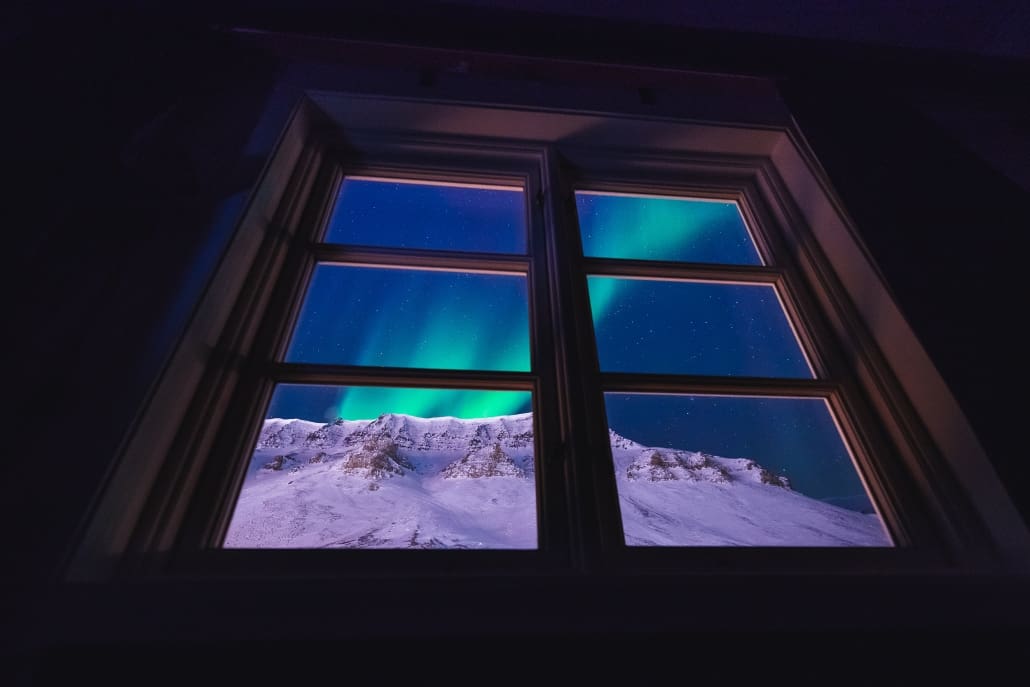
This is the big one, and the polar night is the best time of year for it, for one simple reason: the sky is dark around the clock. On the mainland you wait for night. Here, in December, you can see the aurora at eleven in the morning. We’ve had guests spot it from their bedroom window.
Where to look? If you stay with us, start by stepping outside. Nybyen is at the top of the valley, the darkest part of town, with the mountain Sarkofagen behind the house. Walk five minutes up the road, away from the last lamp, and you have a wide, dark sky. Many of our guests see their first aurora this way.
A guided northern lights tour takes you properly away from the town: out into Adventdalen by bus, snowcat or dog sled, or up on a glacier. The guides know the forecasts, the dark spots and the stories, and if the sky is cloudy over town, they often know a valley where it isn’t. The one honest thing we always say: the aurora is never guaranteed. Clear sky and solar activity both have to cooperate. Give yourself at least three nights and your chances are good.

Want the full guide? Read Northern lights in Svalbard: when, where and how to see them.
2. Dog sledding
If you only do one outdoor activity, make it this one. You meet the dogs in the yard, help harness your own team, and then you’re standing on the runners of a sled while a dozen very excited huskies pull you up a dark valley under the stars. The noise before the start is unbelievable. The silence once they’re running is the opposite. Just the sled hissing on the snow and the dogs breathing.
In the polar night the guides run with headlamps, and on clear nights the aurora often shows up above the team. Some tours end with a warm drink in a trapper’s cabin.
Good to know: early in the season there isn’t always enough snow for sleds. Until the middle of November the kennels usually run dog sledding on wheels, where the dogs pull a cart instead. It’s the same dogs, the same energy, and in the blue twilight of November, it’s lovely. From December, once the snow has settled, it’s sleds all the way to May. Suits almost everyone. You don’t need to be fit, just dressed warmly. See dog sledding tours.

3. Ice caving
Every summer, meltwater carves channels down through the glaciers around Longyearbyen. Every winter those channels freeze and empty, and you can climb down inside. It’s a hike up onto the glacier first, with crampons and a headlamp, then a scramble down through a narrow entrance into rooms of blue ice, ice crystals the size of your hand, and frozen waterfalls. It’s very quiet in there, and a little otherworldly.
Ice cave trips run from November to May, so they are available through the whole polar night. Expect 4 to 6 hours in total with the walk in. You should be comfortable walking a few kilometres uphill in the snow and crawling through a tight space or two, but you don’t need climbing experience. Not ideal for anyone with claustrophobia. See ice cave tours.


4. Guided hiking in the dark
Hiking doesn’t stop when the sun does. It changes. You walk with a headlamp, the snow lights up around your feet, and the mountains around the valley become dark shapes against a sky full of stars. The guide carries the rifle and the flare gun and does the navigating, so you can simply walk. We think it’s one of the best ways to understand the polar night, because you’re out in it for hours.
There are routes for every level:
- Easy: a walk along the valley floor in Adventdalen, or out to Hiorthhamn on the frozen fjord side (November to March). Flat, a couple of hours, great for aurora.
- Moderate: up to Platåfjellet (Plateau Mountain), the flat-topped mountain, for a fascinating panormaic view over the whole town. Or the hike between the glaciers to Sarkofagen, the mountain right behind Nybyen, which guides run all year round.
- Challenging: Trollsteinen, the rock formation on top of the ridge behind Nybyen, which is possible to combine with an ice cave visit on the way. A proper mountain day in the dark, with crampons. Runs November to May, conditions permitting.
All of these depend on the weather on the day. Strong wind or poor visibility means the guide picks another route or another day. Wear proper winter boots and bring a headlamp; most operators lend crampons and a reflective vest. See guided hikes.
5. Visit a coal mine
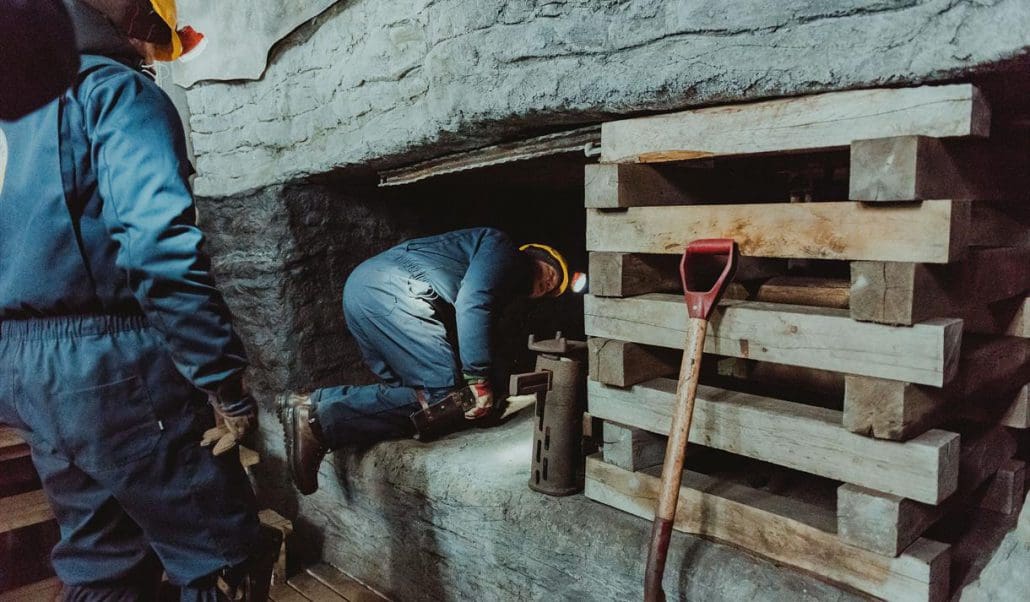
Longyearbyen exists because of coal, and the best way to understand the town is to go into a mine. Gruve 3 (Mine 3) closed in 1996 and the miners more or less put their tools down and walked out, so everything is still there: the workshops, the machines, the maps on the walls. You get a helmet, a headlamp and a miner’s overall, and you walk several hundred metres into the mountain. If you dare, you crawl through a replica of a working seam, which was often less than a metre high. That part explains more about the old Longyearbyen than any museum could.
There’s a nice twist: in 1984 the first seed bank on Svalbard was placed inside this very mine, which is where the idea for the Global Seed Vault came from. The tour drives past the Vault on the way up.
Gruve 3 runs all year, takes about 3 hours including pick-up from your accommodation, and has a minimum age of 12 and a minimum of two guests. It’s cold inside, so dress for the outdoor temperature. Not suitable for wheelchair users or anyone who strongly dislikes tight spaces. See the mine visit.
6. Longyearbyen sightseeing tour
Our favourite first-day activity, especially if you arrive in the afternoon. A local guide picks you up right outside the hostel, and drives you around the town and its surroundings for a couple of hours (2-5 hours, depending on the tour), telling you how the place works: the mines above town, the church, Nybyen and the old miners’ barracks (that’s us), the harbour, the university, the dog yards, and out towards the Global Seed Vault, where you can stop at the entrance for a photo. You can’t go inside the Vault; nobody can, apart from the people who deliver the seeds. But the entrance is lit up beautifully in the dark. You’ll learn the interesting history of our town on this trip.
It’s the easiest activity in this list. No fitness needed, warm bus, works in almost any weather, and you’ll understand everything else you do afterwards. Runs all year. See sightseeing and lectures.
7. Arctic Float
A new tour in town! You put on an immersion suit (the kind sailors use in emergencies), walk into the Adventfjorden from the beach, lean back and float. The suit keeps you completely dry and warm. The water holds you. Above you is the polar night sky, and across the fjord are the lights of Longyearbyen. Some days it’s mirror-calm. Some days there are waves and wind, which the operator is honest about: it’s the Arctic. Either way, about 20 minutes of lying still in the sea, looking up, is a strange and rather wonderful way to spend an afternoon.
Afterwards you warm up in the boathouse with hot drinks and waffles with brown cheese, while the guide tells stories. The trip is run by Svalbard Wildlife Expeditions, takes about two hours including pick-up, and costs NOK 1,490. Minimum age 14, you need to be comfortable in water, and it’s not for anyone pregnant, with a heart condition, or who struggles with a tight suit around the neck. If sea conditions aren’t safe on the day, you’ll be moved or refunded. Hurtigruten Svalbard runs a similar floating experience from November to February. Ask us and we’ll book either one.

8. Beer tasting at Svalbard Bryggeri
Here’s a story. Until 2014, a law from 1928 made it illegal to produce alcohol on Svalbard. Robert Johansen, a former miner and pilot, spent years lobbying to get the law changed so he could brew beer at 78° north. He won, and in August 2015 Svalbard Bryggeri poured its first pint. Today it’s the northernmost commercial brewery in the world, and every pub in town serves its beer.
The tasting takes about an hour and a half. You sit in the brewery bar with windows looking straight down into the production hall, hear the story, learn how the beer is made with 2,000-year-old glacier water from Bogerbreen, and taste five of them. It’s relaxed, funny, and a perfect evening when the wind is howling outside. The brewery is in the harbour area, a short taxi ride from Nybyen. Tastings run several evenings a week and sell out, so book ahead. Over 18s only. Book a brewery tasting.

9. Snowmobile tours
Snowmobiles are how locals get around the wilderness in winter, and a guided snowmobile trip is one of the great Svalbard experiences. But here’s the thing we have to be straight about: snowmobile tours need snow, a lot of it, and the polar night doesn’t always deliver it on time.
In a typical year, the first short snowmobile trips, like an evening northern lights ride into Adventdalen, start somewhere between mid-December and January, once the valleys have a solid snow cover. The long trips out to the east coast, Tempelfjorden or the Russian settlements are a February-to-May thing, when there’s both snow and daylight. If you come in November, assume there will be no snowmobiling. In December and January, it’s possible but never certain until the week itself.
So please don’t plan a polar night trip around snowmobiling. Plan it around dogs, ice caves, hikes and the aurora, and treat a snowmobile ride as a bonus if the snow comes early. If snowmobiling is your main reason to visit, February, March and April are your months. See snowmobile adventures.
10. A few more, including for calm days and stormy ones
- Snowcat safari. A big tracked vehicle with a warm cabin that drives you up onto the plateau to look for aurora. Easy, comfortable, works for everyone. Runs from November.
- SvalBad floating sauna. A wood-fired sauna on a raft in the harbour. You sweat, you look at the fjord, and if you’re brave, you dip! You should not miss this opportunity when visiting.
- Photo walk. Join a photo safari to learn how to shoot the aurora and the blue light. Bring spare batteries; the cold eats them.
- A day in town. Museum, lunch, a swim at Svalbardhallen, attend a yoga class, coffee, the library, the gallery in Nybyen, dinner. Nothing wrong with that, and on a storm day it’s exactly right.
What’s usually possible, month by month
- October: faint daylight by day, dark skies by night. Hiking, dog sledding on wheels, boat trips until the fjord gets rough, mine visit, sightseeing, brewery. Dark Season Blues at the end of the month.
- November: the polar night begins on the 14th. Aurora, ice caves, hikes, dog carts (sleds if snow comes early), Arctic Float, snowcat, skiing, mine, sightseeing. No snowmobiles yet.
- December: full polar night. Dog sledding on snow, ice caves, hikes, aurora around the clock, Arctic Float, Advent and Christmas in town. Snowmobiles only if snow allows, usually late in the month at the earliest.
- January: still fully dark until the 29th, often the coldest weeks. Everything from December, and the first snowmobile trips in most years. Quietest month for tourism.
- February: the blue light returns at midday, aurora still strong in the evenings. All winter activities, snowmobiles reliably from here on, Polarjazz on the first weekend. A lovely compromise month. (My favourite month, by the way ^_^)
All of this depends on weather, snow and the operators’ schedules. We check the live calendar for your dates and tell you what’s actually running. See all activities →
What if the weather turns?
It will, which is not unusual during the dark season. The Arctic doesn’t do a full week of calm. We get storms with strong winds and horizontal snow that close the road to Nybyen for a few hours, days where the temperature drops to minus 20 with wind on top, and the occasional mild spell with rain in early November that annoys everyone. The guides watch the forecast closely, and if a trip isn’t safe, it gets moved, shortened or cancelled. That’s not a failure. It’s how people stay alive up here, and it’s been the rule since the mining days.
What we tell guests: build in slack. Book your must-do activity for your first or second full day, not the last, so there’s room to move it. Keep one day loosely planned. And have a storm-day list ready: the museum, the brewery, a long lunch, the sauna, the pool, a book by the window in our lounge, and the simple pleasure of watching a real Arctic storm from the warm side of the glass. Some of our guests’ favourite days here were the ones where nothing went to plan.
Flights can be delayed by weather too, though it’s less common than people fear. If you have a tight connection on the mainland, give yourself a buffer.
Staying in Nybyen during the polar night
A word about where you sleep, because in the polar night it matters more than in summer. You’ll be outside in the cold for hours, and coming home to somewhere warm and easy makes the whole trip.
Gjestehuset 102 is a former miners’ barrack at the top of the valley in Nybyen, about 2 km from the centre. Behind us is Sarkofagen, above us is the old Mine 2B, which the children call Santa’s mine, and around us is the darkest, quietest corner of town, which is exactly what you want for aurora. The airport bus and all the tour pick-ups come to our door.
Inside, it’s simple and warm. Every room has its own sink (so convenient!), breakfast with fresh waffles is always included, and there’s hot coffee, tea and chocolate in the lounge around the clock for when you come in from the cold. We have a fully-equipped common kitchen if you want to cook, a drying room for wet gear, and a reception that will happily book your tours, lend you a headlamp and tell you which valley had clear skies last night. In the dark season we also run our lowest rates of the year, and in December there’s a Christmas package with a seat at our Christmas Eve table.

Practical tips and frequently asked questions
Polar bear safety: please read this one
Polar bears live all around Svalbard, and in winter they can turn up anywhere outside the settlement, including close to town. The rule is simple: do not leave the settlement area without a rifle, or without a guide who carries one. There are polar bear warning signs at the edges of town; they mark the real boundary. Inside it, Longyearbyen is safe to walk around, day and night. Outside it, you go with a guide. Every tour in this article includes a guide with the right equipment, which is one of the main reasons we recommend guided trips rather than wandering off alone. More on the rules at the Governor of Svalbard’s website.
Is it safe to visit Svalbard in the polar night?
Yes. The town is well lit, crime is almost non-existent, and the main risks are the ones you manage with common sense: cold, wind, ice underfoot and polar bears outside town. Wear a reflective vest when you walk in the dark, because drivers can’t see you otherwise, and stay inside the settlement unless you’re with a guide.
Is Longyearbyen completely dark all day?
From 14 November to 29 January, yes, there is no daylight. In late October, early November and February there is a blue twilight for a couple of hours in the middle of the day.
Can you see the northern lights during the daytime?
In the polar night, yes. Because the sky is dark at noon, the aurora can show up at any hour, including in the middle of the day. That only happens in a handful of places on Earth.
Can I walk around town on my own?
Yes, within the settlement, including from our hostel down to town. Walking between Nybyen and the centre takes about 30 minutes along the road and is perfectly normal. Bring a headlamp and/or a reflective vest, and take a taxi if there’s a storm.
Can I explore outside town independently?
Not without a rifle and the training to use it. For visitors, that means going with a guide. There’s plenty to do inside town on your own, and plenty outside it with a guide.
Are shops, cafés and restaurants open?
Yes, all winter! Some may have shorter hours on weekdays and over the Christmas and New Year holidays. Book dinner on Fridays and Saturdays.
Can I book tours in November, December and January?
Yes. Aurora tours, dog sledding, ice caves, guided hikes, snowcat trips, the mine, sightseeing, Arctic Float and the brewery all run through these months. Snowmobiles are the exception; see below.
Are snowmobile tours available in the polar night?
Usually not in November. Sometimes from mid-December, more often from January, depending on snow. Reliably from February. Don’t build your trip around it.
How cold does it get?
Typical daytime temperatures are around -5 to -15 in November and December, and minus -10 to minus -20 in January, with colder spells down to -25 and the occasional mild day above zero. Wind makes the biggest difference: -10 with no wind is pleasant, -10 with a gale is not! Dress warmly!
What should I pack?
Wool base layers, a warm middle layer, a windproof outer jacket and trousers, insulated winter boots with good grip, thick wool socks, warm mittens, a hat, a buff, a headlamp, a reflective vest and a power bank. Leave the sneakers at home. If you forget something, Longyearbyen has excellent outdoor shops and guests at 102 get a discount at Arctica. Our dark season post has the full packing list and a video.
Do I need special equipment for tours?
No. Guides provide the technical gear: crampons, snowshoes, immersion suits, snowmobile suits and helmets, headlamps where needed. You bring warm clothes and good boots.
Is it suitable for children, older visitors and solo travellers?
All three. Families love the dogs, the sightseeing tour and Christmas in town; check age limits on individual tours (the mine is 12+, Arctic Float 14+, brewery 18+). Older visitors do well with the snowcat, sightseeing, the mine and the aurora bus. Solo travellers are a big part of our winter guests; the tours are small groups, the lounge is sociable, and you’ll have company at breakfast.
How many days should I stay?
4 nights is the minimum we’d suggest, 5 or 6 is better. It gives you a fair chance at the aurora, room to move a tour if the weather turns, and time to slow down, which is really what the polar night is about.
Is December a good time to visit?
If you want the full polar night and Christmas at 78° north, yes. It’s the darkest month and one of the cosiest. Just know that snowmobiling is unlikely.
Is January different from November?
Quite a bit. November has the last of the blue light, less snow, dog carts rather than sleds, and milder temperatures. January is fully dark until the 29th, colder, snowier, quieter, and usually the first month with snowmobiles. Both have aurora.
How do I get from the airport to town?
The airport bus meets every flight, stops at all accommodation including ours, and costs about NOK 125. Tell the driver you’re going to Gjestehuset 102. Taxis are available too. You can’t walk it; the road passes outside the settlement.
Is there public transport in Longyearbyen?
No buses within town apart from the airport bus. People walk, take taxis or drive. Nybyen to the centre is a 30-minute walk or a short taxi.
Can I take photos in the polar night?
Yes, and it’s a photographer’s dream, but you’ll need a tripod for the aurora and the blue light, a camera that handles high ISO, and spare batteries kept warm in an inside pocket. Phones have become surprisingly good at night mode. For the aurora, a few seconds’ exposure on a tripod beats anything handheld.
More practical questions? See our FAQ page, or send us a message. We answer these every day.
The dark is the point
We’ll end where we started. No, Longyearbyen is not closed in the polar night. It’s open, warm, busy in its own small way, and surrounded by a landscape you can only see like this for a few weeks a year. The dogs are waiting, the ice caves are forming, the brewery is pouring, and somewhere above the valley the sky is probably turning green right now.
If you’ve been wondering about coming in the dark, consider this your push. Book directly with us for the best price, breakfast included, and 5% off selected tours. Then tell us what you want to do, and we’ll help you plan the rest.
Follow us for more from the polar night
Daily life in the dark, reindeer and all, on our social media.
Over to you
Have you visited Svalbard in the polar night? What did you do, and what surprised you? Tell us in the comments. Your answer might be the push someone else needs.