11 Surprising Facts About Longyearbyen
Polar bears outside town, no cats allowed, and a rule against being buried. Longyearbyen is not like other towns, and after almost nine years at reception we still get the same wide eyes when we tell guests about it.
Text: Angie, Gjestehuset 102
Before you read
How much do you already know about Longyearbyen?
Five quick true or false questions. No prizes, just bragging rights at breakfast.
1. It is illegal to die in Longyearbyen.
Nope. Dying is allowed, like everywhere else. Being buried here is what is not allowed. More on that in fact 1.
2. You can bring your cat on holiday to Svalbard.
Cats are banned on the whole archipelago, to protect the birds. Dogs are very welcome.
3. In summer the sun does not set for about four months.
From around 20 April to 22 August the sun never goes below the horizon. Midnight looks like mid-afternoon.
4. Most people who live here were born here.
Almost nobody is born in Longyearbyen. Mums fly to the mainland a few weeks before the due date.
5. You need a rifle, or a guide with one, to leave town.
Polar bears can be anywhere outside the settlement, so you do not go past the warning signs without protection.
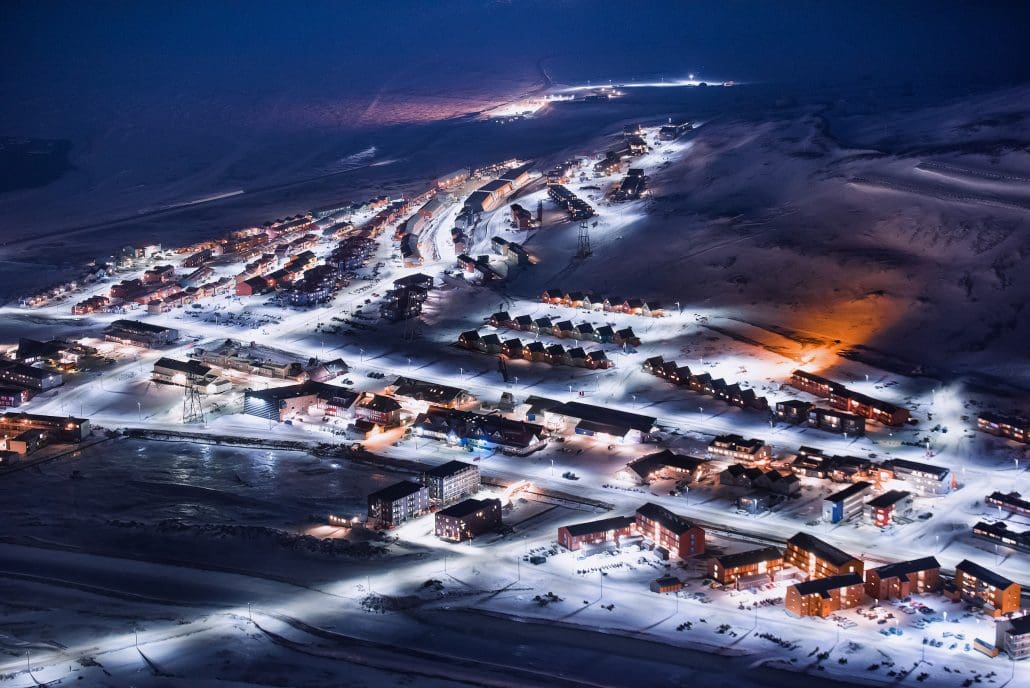
Longyearbyen sits at 78° north, roughly halfway between mainland Norway and the North Pole. It is the northernmost town in the world with a normal everyday life: a school, a supermarket, a library, a hospital, a church, a couple of pubs, and us. Around 2,500 people live here, and they come from more than 50 countries.
The name has nothing to do with long years, even if some winters feel that way. The town is named after John Munro Longyear, an American businessman who came to Spitsbergen in 1901 as a tourist, liked what he saw, and came back to dig for coal. His Arctic Coal Company started the settlement in 1906. So “Longyearbyen” simply means “Longyear’s town”.
Need a place to stay? Book directly with us for our best price, breakfast with fresh waffles included, and 5% off selected tours. Check availability →
Here are eleven facts about our small, strange, wonderful town. Some you might have read before. A few will probably surprise you.
1. Dying is not illegal. Being buried is.
Let’s clear this one up first, because we hear it almost every week: no, it is not illegal to die in Longyearbyen. What you can’t do is get buried here. The cemetery in town has not taken coffin burials since 1950. The permafrost stops bodies from breaking down, and over time the frozen ground slowly pushes things back up towards the surface. Urns can still be buried with permission. Everyone else is flown to the mainland.
The little cemetery with its white crosses is still worth a quiet visit. It sits on the hillside along the road between the town centre and Nybyen, so you’ll pass it on your way to us. In summer the ground around it is full of flowers.

2. Cats are banned. Yes, all of them.
Cats are not allowed anywhere on Svalbard, and they haven’t been for decades. The reason is the birds. Svalbard has huge seabird colonies and lots of ground-nesting birds, and a cat loose among them would be a disaster. So no cats. Not even indoor ones.
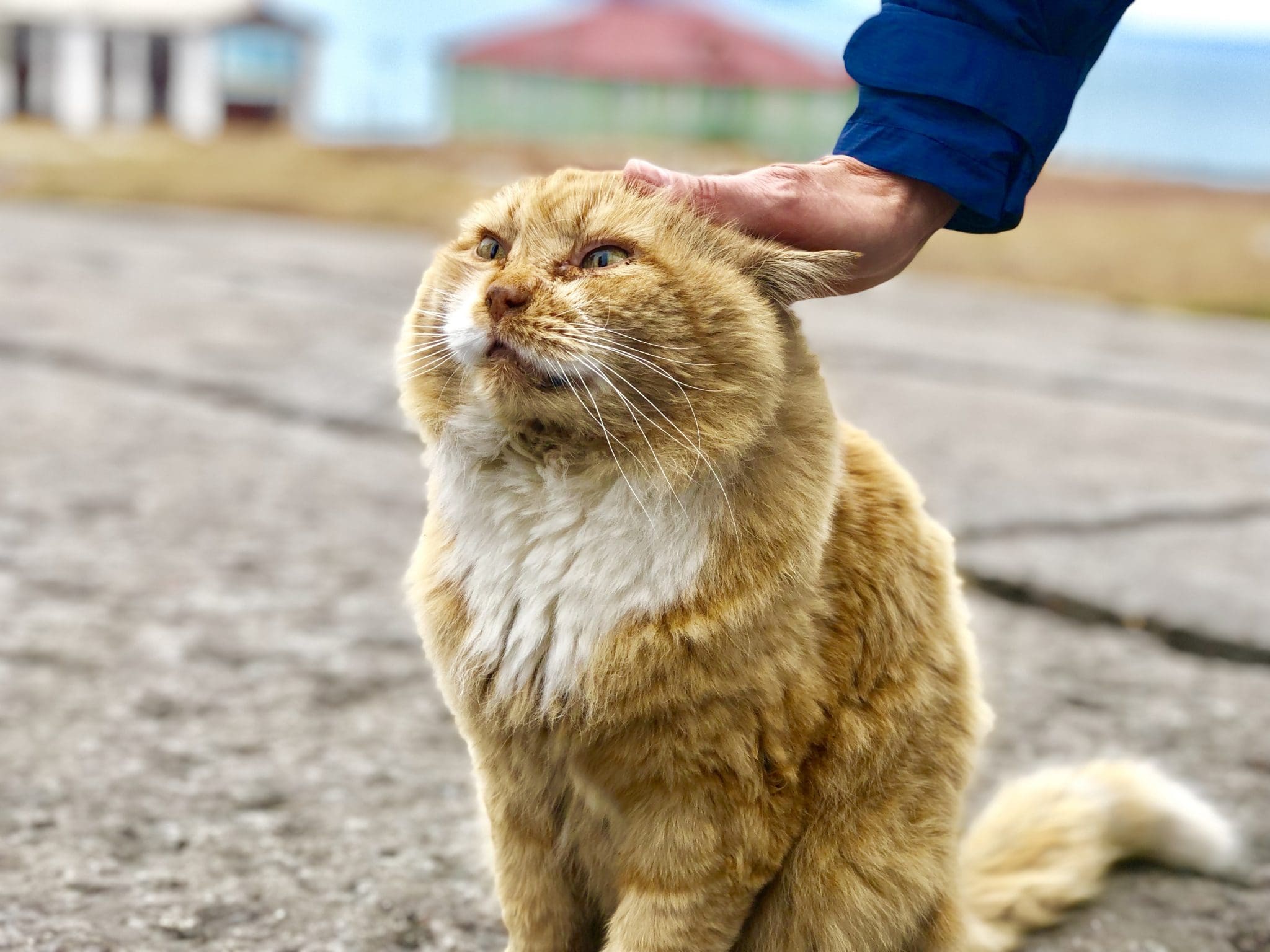
If you were here before 2021, you might remember Kesha, a big ginger cat who lived in the Russian settlement of Barentsburg and became a bit of a celebrity. On paper he was registered as an Arctic fox, which is how he got around the rule. Kesha passed away in January 2021 at the age of 14, and as far as we know he was the last cat on Svalbard.
Dogs, on the other hand, are everywhere. Several dog yards sit just outside town, and on a quiet evening you can hear them howling across the valley.
3. The sun doesn’t set for four months
From around 20 April to 22 August the sun never goes below the horizon. Midnight looks like mid-afternoon. It sounds lovely, and it is, but it also messes with your head. Our rooms have thick blackout curtains, and we still suggest you set an alarm, because your body will have no idea what time it is.
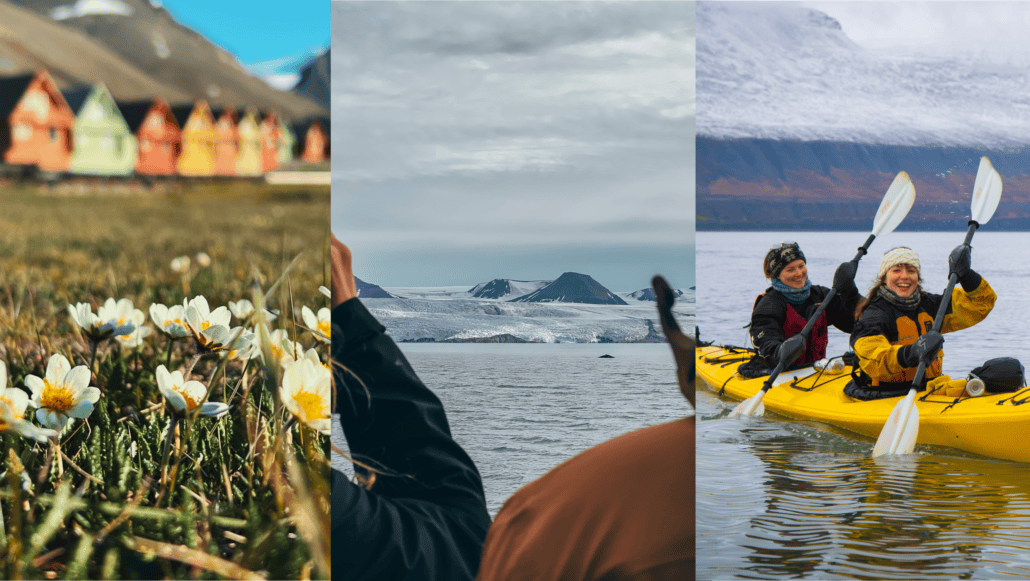
This is also when the valley turns from white to brown and green, the reindeer get fat, and we spend as much time outside as we can. Hiking, kayaking and boat trips are at their best now. If you’re brave, a dip in the fjord is a local rite of passage. The water is a few degrees above freezing. You’ll scream. Everyone does.

Want the full picture? Read our guide to the midnight sun in Svalbard.
4. Nobody is born here
Longyearbyen has a small hospital, but it is not set up for births or anything that might need surgery. So about three weeks before the due date, pregnant women fly down to the mainland, usually Tromsø, and come back with the baby a week or two later.
It leads to a funny situation. There are children all over town, kindergartens and a school, and almost none of them were born here. When the kids say they’re “from Longyearbyen”, they mean it, even if their passport says otherwise.

5. People carry rifles, and it’s normal
Polar bears live all around Svalbard, and they don’t read signs. Anyone leaving the settlement is required to carry something to scare off, or in the worst case stop, a bear. That means a flare gun and a rifle, or a guide who carries them. So don’t be alarmed if you see someone walking down the road with a rifle on their back. They’ve probably just come back from a hike.
What you won’t see is rifles inside shops, the bank or the pub. Most buildings have a gun safe by the door, and that includes us here at 102. On your way out of town you’ll pass the famous polar bear warning sign. That is the actual edge of the settlement, and the rule applies from there.
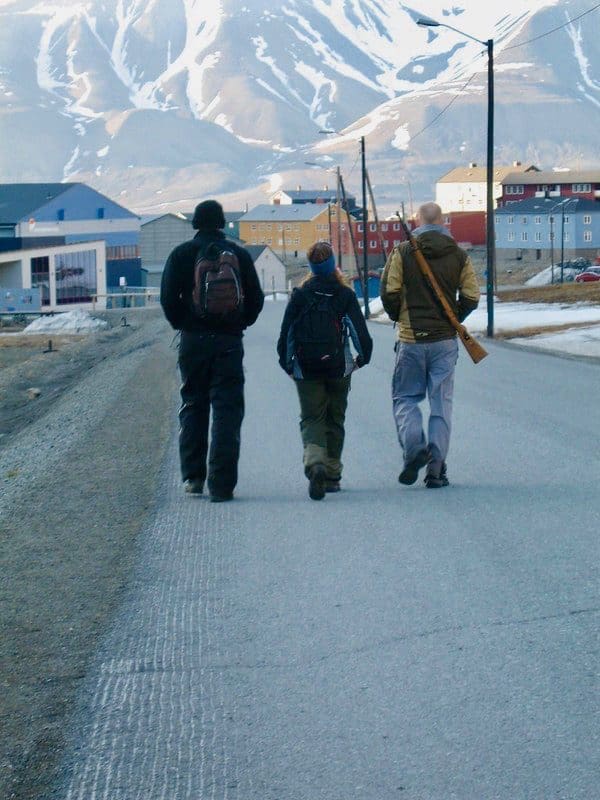
Going on a hike? Stay inside the settlement if you don’t have a rifle, or join a guided trip. Book your room directly with us and get 5% off selected tours. See activities →
6. The houses stand on stilts
Look under almost any building in Longyearbyen and you’ll find it standing on posts. The ground here is permafrost: frozen all year, apart from a thin layer on top that thaws in summer. Put a warm, insulated house straight on the ground and the heat slowly melts the permafrost underneath. The ground turns to mud, and the house sinks and cracks. So everything, from the school to our guesthouse, stands on stilts with cold air flowing underneath.
The same goes for pipes. Water and sewage run above ground in insulated wooden boxes, which is why you’ll see those long casings snaking along the roads.

7. Shoes off at the door
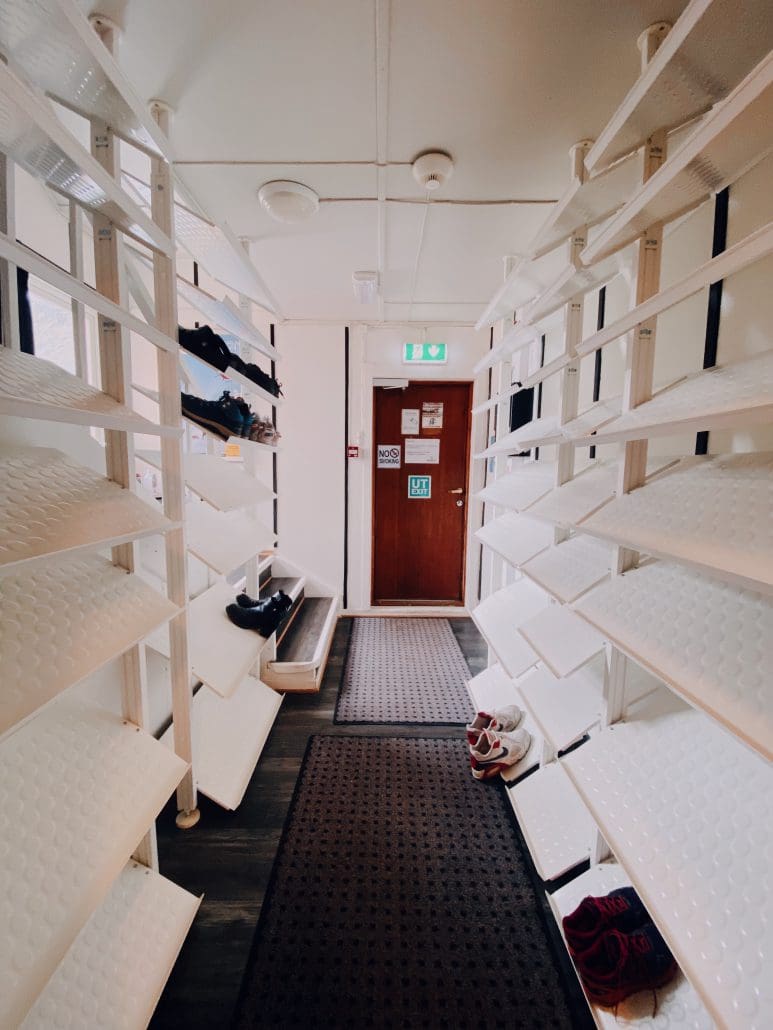
This is the tradition our guests love the most. In Longyearbyen you take your shoes off when you go indoors. Not only at home, but at the museum, the church, the tourist office, some restaurants, and here at Gjestehuset 102. It goes back to the coal mining days, when the miners came in covered in coal dust and nobody wanted that on the floors.
So pack a pair of slippers or thick wool socks. We have a big shoe rack in the hallway, and you’ll quickly get used to padding around in socks. It’s part of the charm.
8. Don’t pick the flowers
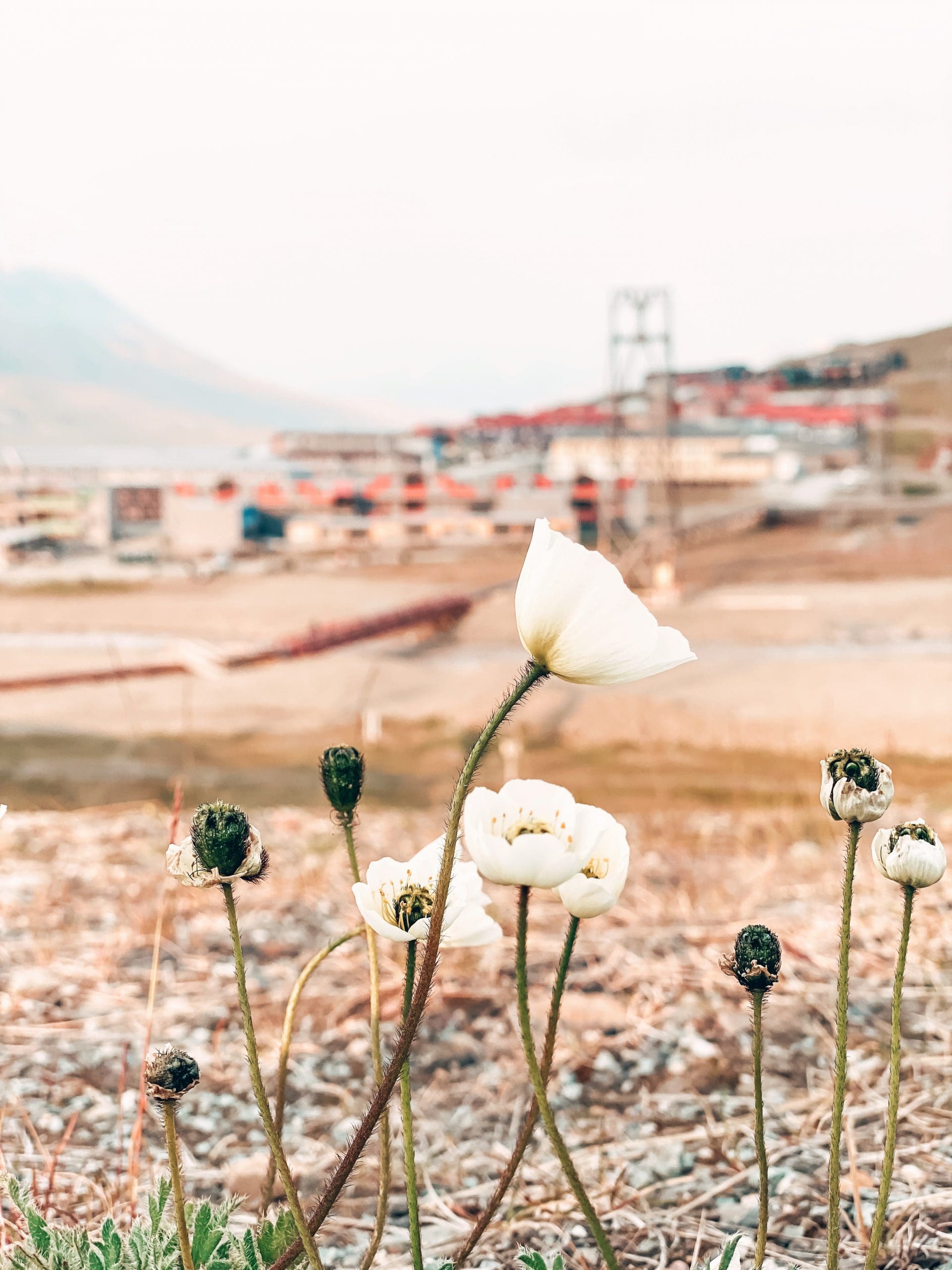
Yes, another rule. Everything that grows on Svalbard is protected, and picking flowers is not allowed anywhere on the islands. Only a small part of the land has any vegetation at all, and what does grow has a very short summer to do it in. The Svalbard poppy you’re tempted to pick in July has spent years getting to that point.
That said, the summer flowers are worth coming for. Purple saxifrage is the first one out, sometimes while there’s still snow, and by July the valley floor around Nybyen is full of colour. Photos are very welcome. Bouquets are not.
9. The world’s seed backup is just up the road
On the hillside between town and the airport sits the Svalbard Global Seed Vault, a concrete entrance that disappears into the mountain. Inside, in rooms kept at minus 18 degrees, are seed samples from almost every country on Earth. More than a million of them. It’s a backup copy of the world’s crops, in case something goes badly wrong somewhere else. The permafrost and the solid rock mean the seeds would stay frozen for a long time even if the power failed.
You can’t go inside, but the entrance is a popular photo stop, and in the dark season it’s beautifully lit. Many of the sightseeing tours around Longyearbyen drive past it, and we can help you book one.

10. Reindeer are the neighbours
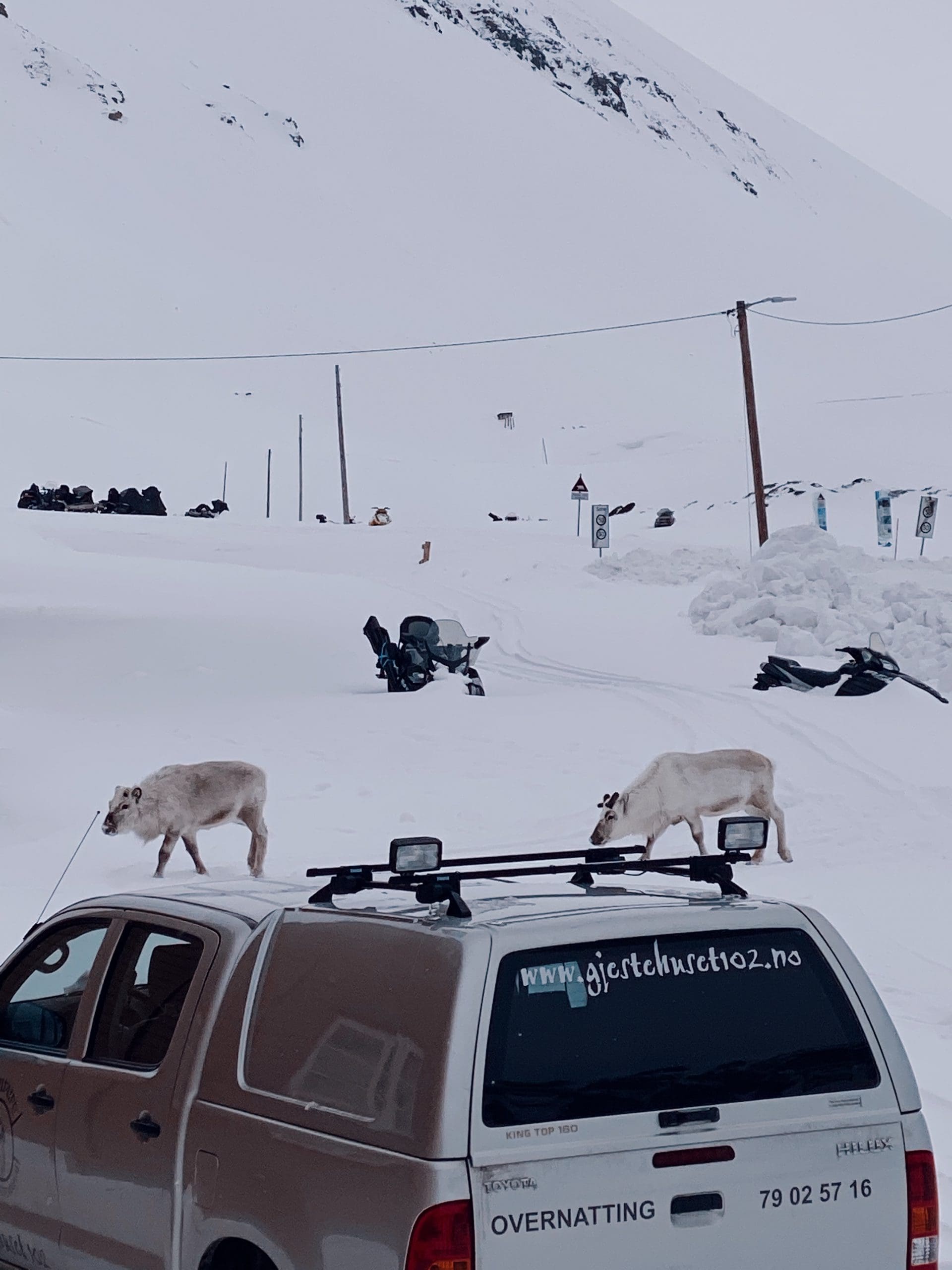
The Svalbard reindeer is its own subspecies: shorter legs, rounder body, and a much more relaxed attitude to people than reindeer on the mainland. They wander through town, graze on the football pitch, and in winter they dig through the snow right outside our windows.
We see them on the grounds of Gjestehuset 102 almost every week. Give them space, don’t feed them, and don’t try to get close for a selfie. They are wild animals, even if they look like they’ve just woken up from a nap.
Curious about the foxes, walrus and birds too? Read Arctic wildlife on Svalbard.
11. One town, more than 50 nationalities
Svalbard is Norwegian, and Longyearbyen looks and feels like a Norwegian town, with Norwegian as the main language. But it is also one of the most international places you’ll ever visit. Thanks to the Svalbard Treaty from 1920, citizens of the countries that signed it can live and work here without a residence permit. Today people from more than 50 countries live in Longyearbyen, with big communities from Thailand, the Philippines, Sweden, Russia and Ukraine, among many others.
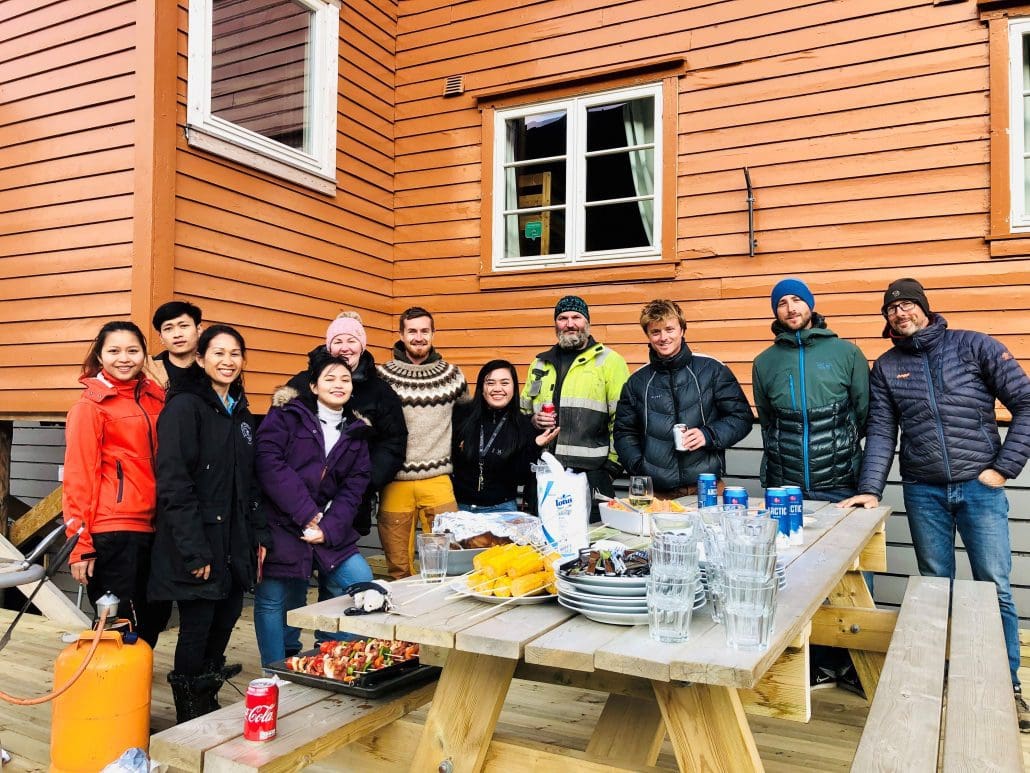
You’ll notice it the moment you walk into our breakfast room. Most of our team is Filipino, and the stories around the table come from all over the world.
One practical thing: Svalbard is outside the Schengen area, so you’ll go through passport control in Oslo or Tromsø on the way up. Bring your passport, even if you’re flying from inside Europe.
Longyearbyen in numbers
- Latitude: 78° north, about 1,300 km from the North Pole
- People: around 2,500, from more than 50 countries
- Midnight sun: 20 April to 22 August
- Polar night: the sun sets in late October and comes back in mid February. It shines on the town again on 8 March.
- Temperature: well below freezing most of the winter, around 6–7 °C in July
- Getting here: direct flights from Oslo (about 3 hours) and Tromsø
So, which fact surprised you?
We answer questions about all of this nearly every day at reception, and we never get tired of it. If you’re planning a trip, come and stay with us in Nybyen, about 2 km from the town centre, with the mountains right behind the house. Ask us anything. We’ve been here almost nine years and we’re still learning things about this place.
Book directly with us for the best price, breakfast included, and 5% off selected tours.
Follow us for more from 78° north
Everyday life in the Arctic, reindeer included, on our social media.
Over to you
Did you already know all eleven? Or do you have a fact we forgot? Tell us in the comments. We read every one.