Northern Lights in Svalbard: When, Where and How to See Them
Text: Angie, Gjestehuset 102
“The north! the north! from out the north
What founts of light are breaking forth”
Hannah Flagg Gould, “The Aurora Borealis”
Seeing the northern lights is on almost everyone’s bucket list, and Svalbard is one of the best places on Earth to tick it off. At 78° north, we get months of real darkness, very little light pollution, and something most places can’t offer: northern lights in the middle of the day.
We’ve watched the aurora from our windows in Nybyen for many winters. Here’s everything we tell our guests about when to come, where to look and how to give yourself the best chance.
The short answer
- Season: from early October to the middle of March.
- Darkest months: mid-November to the end of January. The sky is dark around the clock, so the lights can appear at any hour.
- Best balance: late February and March, with daylight for activities and dark evenings for the aurora.
- Where: Nybyen (where we are) and Adventdalen, the valley east of town.
- No guarantees: you need a clear sky and some solar activity. Plan for at least 3–4 nights to give yourself a fair chance.
Check availability | See our Dark Season Offer
When is the best time to see the northern lights in Svalbard?
The aurora season in Svalbard starts in early October, when the nights get dark enough again, and lasts until the middle of March. In late October the sun sets for the last time and doesn’t come back until February.
From mid-November to the end of January we are in the deepest part of the polar night. There is no daylight at all, not even at noon. That’s when Svalbard does something special: because the sky never gets bright, you can see the northern lights in the middle of the day. Very few inhabited places in the world can say that.
February and March are popular too. The light comes back slowly, the days are good for snowmobile trips and dog sledding, and the evenings are still dark enough for the aurora.
- Want the deepest darkness and the most aurora hours? Come in December or January.
- Want daylight activities plus aurora nights? Come in late February or March.
- On a budget? October to January has the lowest room rates of the year.
Where to see the northern lights in Longyearbyen
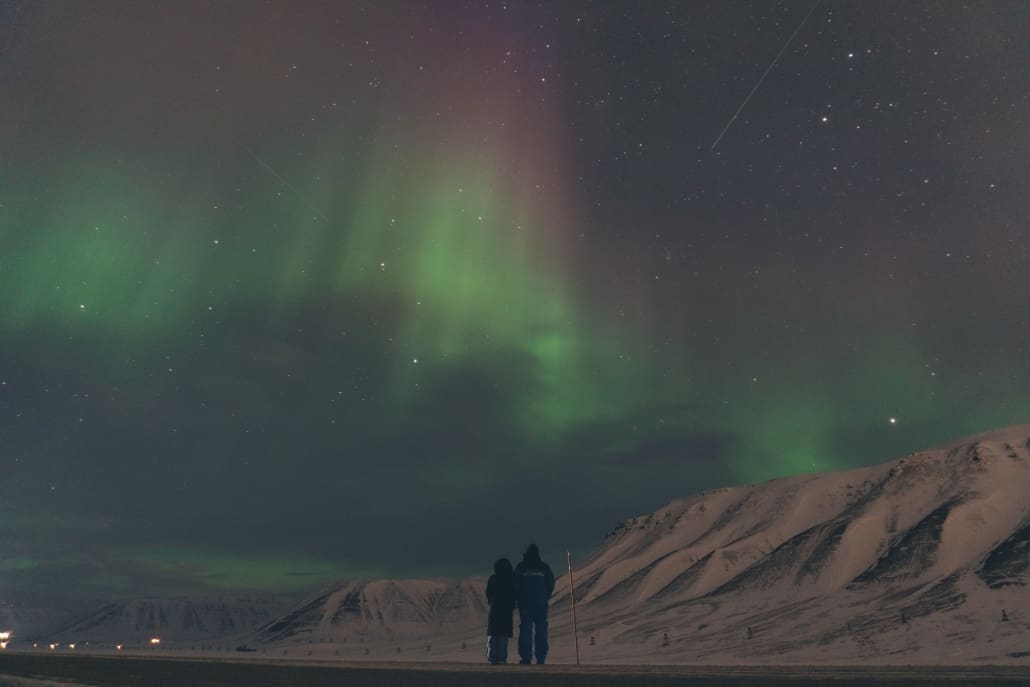
Because Svalbard is a little too far north, the lights often appear in the southern part of the sky. Face south and give your eyes a few minutes to adjust.
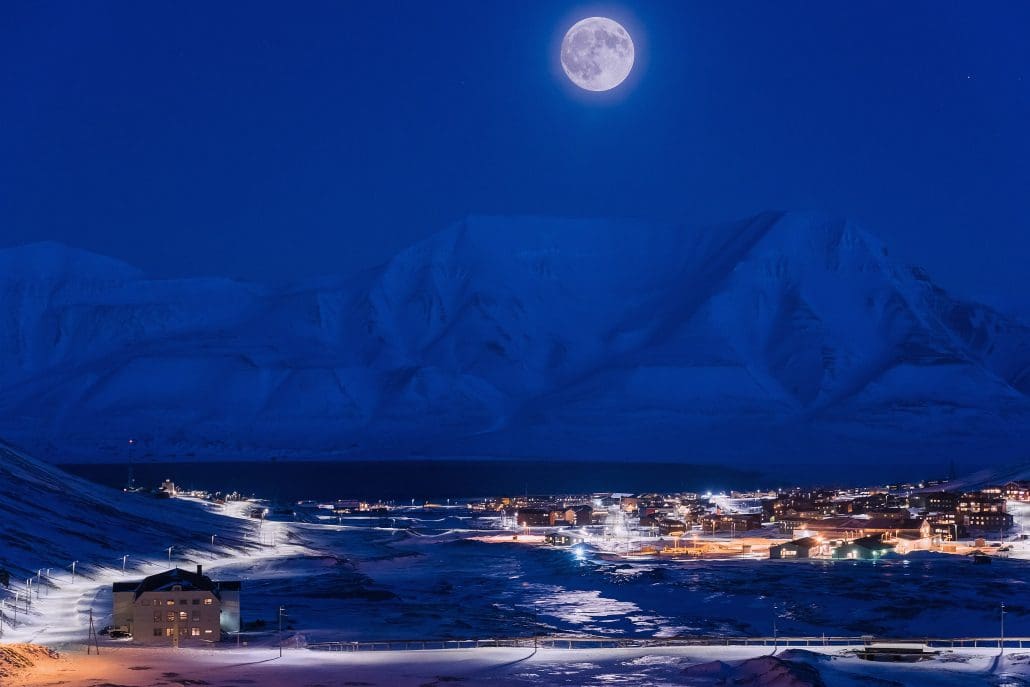
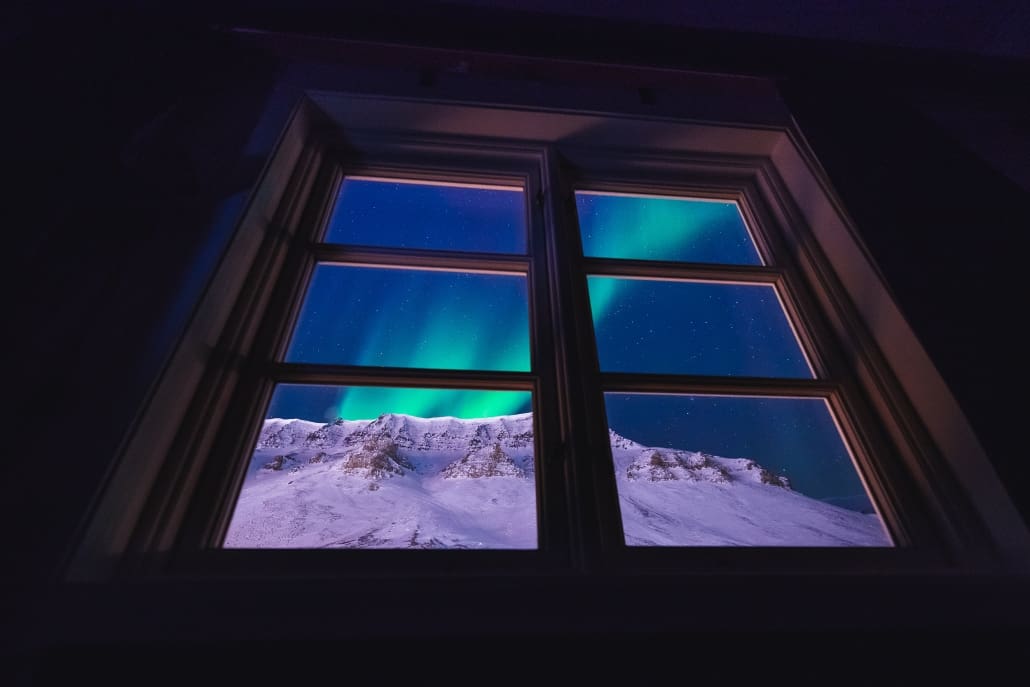
Nybyen. Gjestehuset 102 sits at the top of the valley in Nybyen, the darkest part of town and away from most of the streetlights. When there’s activity, many of our guests see the lights straight from their bedroom window. For a better view, walk a few minutes further up the road toward the mountain Sarkofagen.

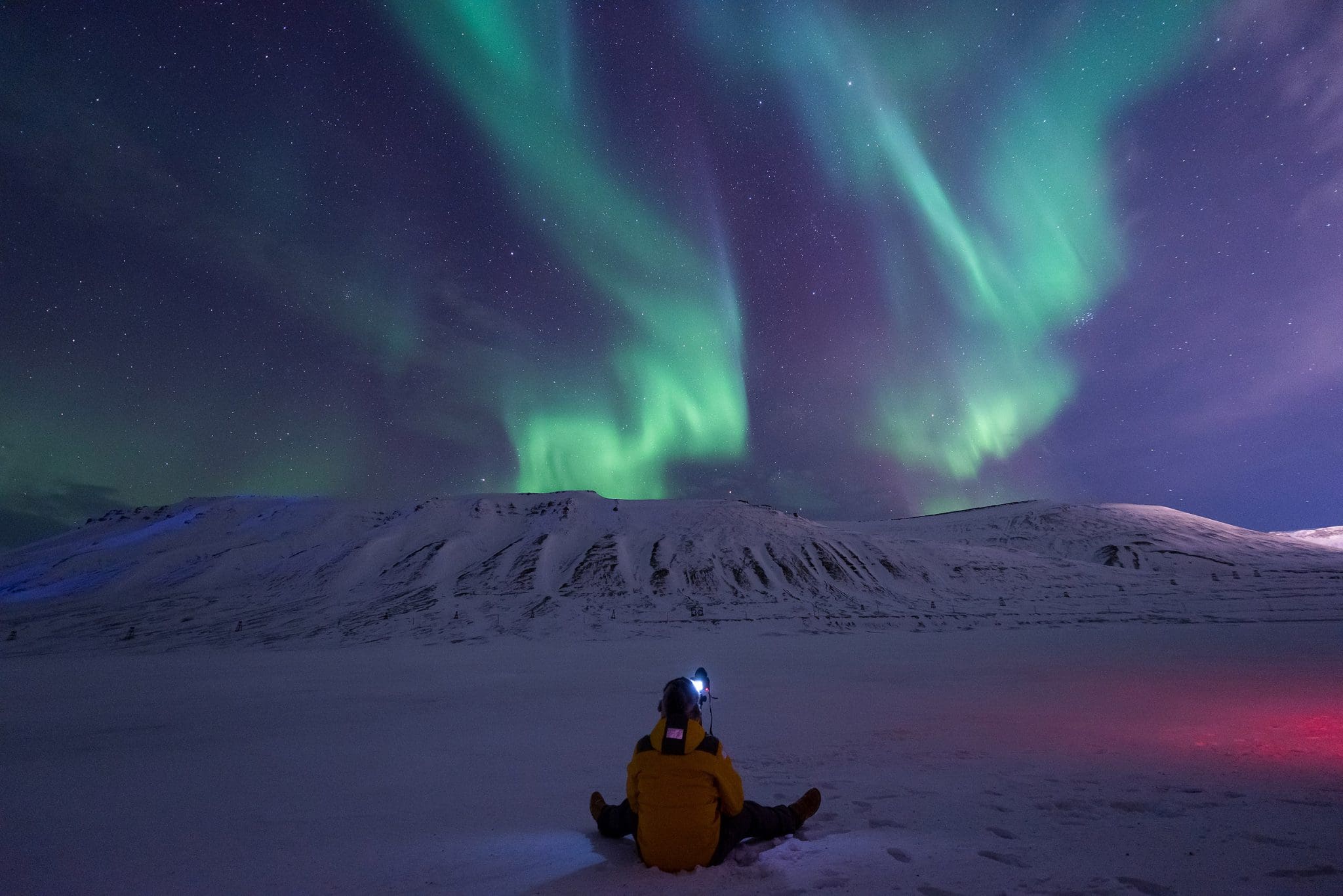
Northern Lights above Sarkofagen in Nybyen by Polina Bublik
Adventdalen. The wide, open valley east of Longyearbyen is the other classic spot, flat and far from buildings. Go with a guide or a tour, as it’s outside the safe settlement area.

Northern Lights in Adventdalen by Eirik Lillehugo
Stay safe: always wear a reflective vest in the dark (you can buy one at our reception), and never walk beyond the edge of town without a guide. Polar bears can be anywhere outside the settlement.

Northern lights above Sarkofagen in Nybyen by Luca Coraci
How to check the northern lights forecast in Svalbard
The northern lights can’t be summoned. There are good nights and bad nights, depending on the sun’s activity and the clouds. Two things to check:
- Aurora activity. Download the Aurora Forecast app, made by the Kjell Henriksen Observatory (KHO) right here in Longyearbyen. It shows the chance of seeing the lights now and in the coming days.
- Cloud cover. Even a strong aurora is hidden behind thick clouds. Check the cloud forecast on yr.no. A clear, starry night is what you want.
And of course, ask us at reception. We love telling guests when the sky is busy.

Northern lights tours
To get away from what little light the town has, join a guided aurora hunt. Local guides know where the sky is clearing and carry everything needed for polar bear safety. Popular options:
- By minibus or snowcat: warm, comfortable and good for all ages.
- By snowmobile: far out into the dark valleys, away from all lights.
- By dog sled: quiet and unforgettable under a starry sky.
- On foot: a guided evening walk with a headlamp.
Book your room directly with us and get 5% off selected tours.
What to wear when hunting for the lights
The best aurora nights are usually the clear, cold ones. Dress in layers: wool underwear, a wool sweater or fleece, and a windproof jacket and trousers. Add warm mittens, a hat, a buff, thick wool socks and insulated winter boots. Your favourite sneakers will have to stay at home.
Here’s a short video guide on how to dress for a Svalbard winter:
Forgot something? Arctica in Lompensenteret has everything you need, and our guests get a 5% discount voucher at reception.

Arctica is in Lompensenteret, the shopping centre in the heart of town.
For the full packing list, see our guide to the dark season.
Taking photos of the northern lights
- Bring a small tripod. You need a steady camera, even for a phone.
- Use your phone’s night mode or long-exposure setting.
- Turn off the flash and give it a few seconds.
- Keep spare batteries or a power bank warm in an inside pocket. The cold drains them fast.
What causes the northern lights?

The lights start with the sun. It constantly sends out a stream of charged particles, the solar wind. When these particles reach Earth and collide with gases high in our atmosphere, the gases light up.

The colour depends on the gas and the height. Oxygen gives the familiar green, usually up to around 160 km. Rare red lights come from oxygen even higher up. Nitrogen gives purple and blue lower down.
The name Aurora Borealis comes from Aurora, the Roman goddess of dawn, and Boreas, the Greek word for the north wind. Long ago, some people saw the lights as a warning of war or plague. Others believed a child born under the aurora would be blessed with luck and beauty. We like the second version.
Our favourite northern lights photos


Northern lights in Svalbard: FAQ
Can you see the northern lights in Svalbard?
Yes. Svalbard is one of the best places in the world for it, with months of darkness and very little light pollution.
When can you see the northern lights in Svalbard?
From early October to mid-March. From mid-November to the end of January you can see them at any time of day, even at noon.
What is the best month to see the northern lights in Svalbard?
December and January give the most dark hours. Late February and March are best if you also want daylight for activities.
Can I see the northern lights from Gjestehuset 102?
Often, yes. We’re in Nybyen, the darkest part of town, and many guests see the lights from their room window on clear nights.
Are the northern lights guaranteed?
No. You need solar activity and a clear sky. Staying a few nights gives you the best chance.
Your basecamp for the aurora
Come back from a cold night outside to a warm room, sleep well, and be ready for the next clear sky. Every room has its own sink, breakfast is included, and everything is under one roof, so you never have to step outside to get to breakfast. Book directly with us for our best price and 5% off selected tours.