Arctic Wildlife: What You Can See & How to Spot It
Reindeer, Arctic foxes, polar bears, walrus, and seabirds in Svalbard. Wildlife tips and a Longyearbyen guesthouse close to open terrain.
Part of what draws people to Svalbard is the sense that you are sharing the place with the animals that actually live here. Arctic wildlife in Svalbard is not kept at a distance in a park; it moves through the landscape on its own terms, and you learn quickly that you are the visitor. Below is what you can realistically hope to see, and when.
At Gjestehuset 102, it’s not unusual to spot a reindeer or Arctic fox right outside the window!
The wildlife of Svalbard at a glance
| Animal | Best season | Where & how | Chances |
| Svalbard reindeer | Year-round | Around town & valleys, often from windows | Very high |
| Arctic fox | Year-round (white in winter) | Valleys, hillsides, sometimes in town | Medium |
| Polar bear | Year-round | Sea ice & coast, by guided boat only | Low – not guaranteed |
| Whales & belugas | Summer | Fjord & boat trips on Isfjorden | Medium |
| Walrus | Summer | Boat trips (e.g. Borebukta) | Medium–high on tours |
| Seabirds | Summer | Bird cliffs & fjords | Very high |
Polar bears – the king of the Arctic (and how to stay safe)
Polar bears are the animal everyone asks about, and it is important to be honest here. They are rare to see near Longyearbyen, and that is a good thing for everyone’s safety. There are thought to be roughly as many polar bears as people across the wider Svalbard region, but they live mainly out on the sea ice and along the remote coasts, far from the settlement. Most sightings happen on longer boat expeditions to the north and east of the archipelago, with operators and guides trained to keep a safe and respectful distance. We would never promise a sighting, and we would gently steer you away from anyone who does.
A real safety note. Polar bears can appear anywhere on the archipelago, which is why travel outside the settlement requires precautions and, in most cases, a guide carrying the proper equipment. This is not meant to frighten anyone. It is simply how life works up here, and the local rules exist to protect both people and bears. We are always glad to explain how it works and connect you with operators who do this responsibly.
💡 Local tip from Gjestehuset 102 Sightings are never guaranteed, and that’s part of the magic – these are truly wild animals. Whatever you do, never travel outside Longyearbyen without a guide!

Svalbard Reindeer
The most familiar faces in and around Longyearbyen are the Svalbard reindeer. They are a subspecies found nowhere else, stockier and shorter-legged than their mainland cousins, and surprisingly relaxed around people. You can often see them grazing on the slopes right at the edge of town, and from our location in Nybyen, it is not unusual to spot one nearby, sometimes from the window. They are visible all year, with calves appearing in June.


Arctic Fox
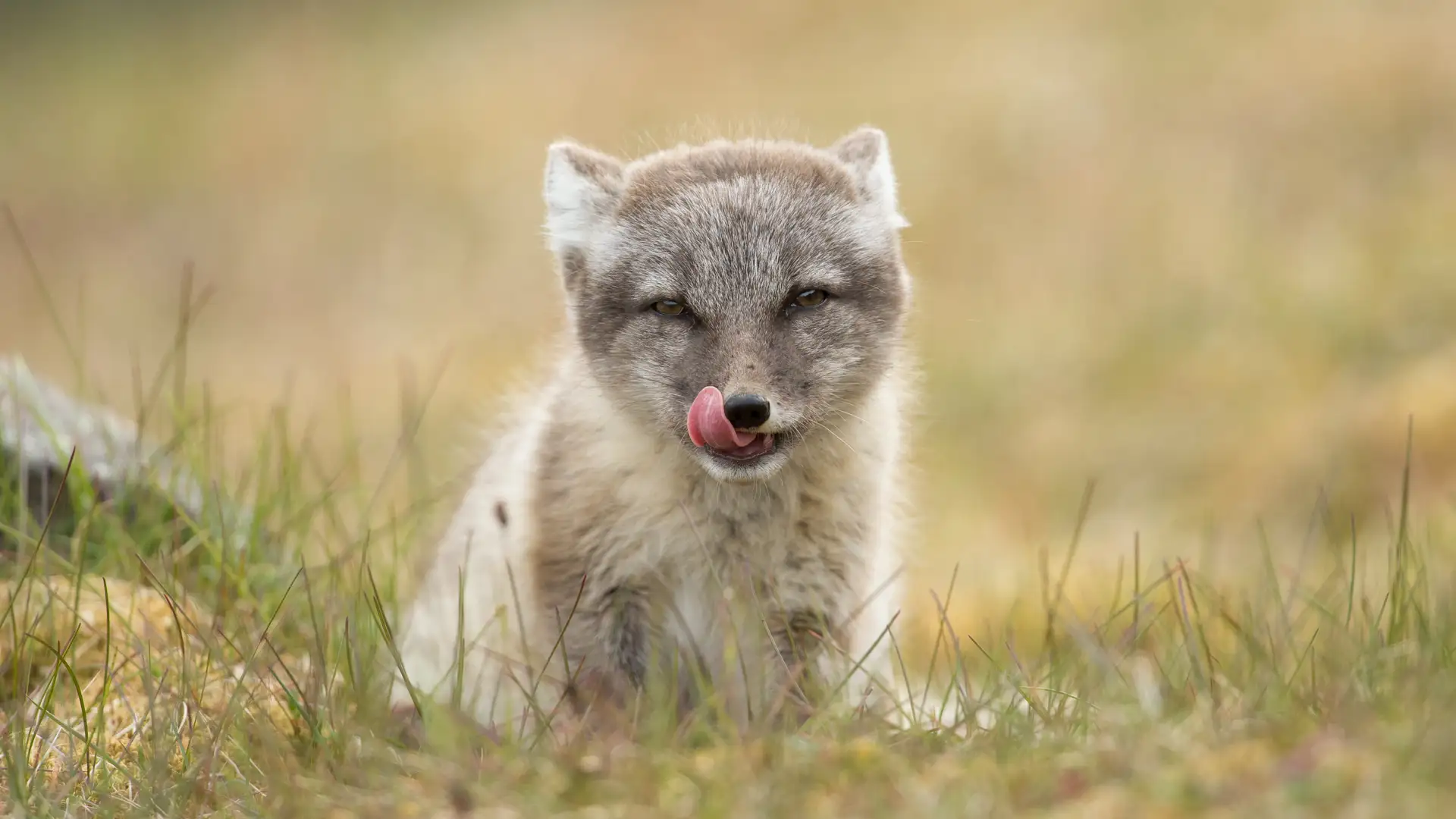
The Arctic fox is the archipelago’s only native land predator and a true survivor of this climate. In summer, its coat is brown; in winter, it turns thick and white, which makes the colder months the most striking time to see one. They move quickly and tend to keep their distance, so a sighting is often brief, but they pass through the valleys around Longyearbyen throughout the year.

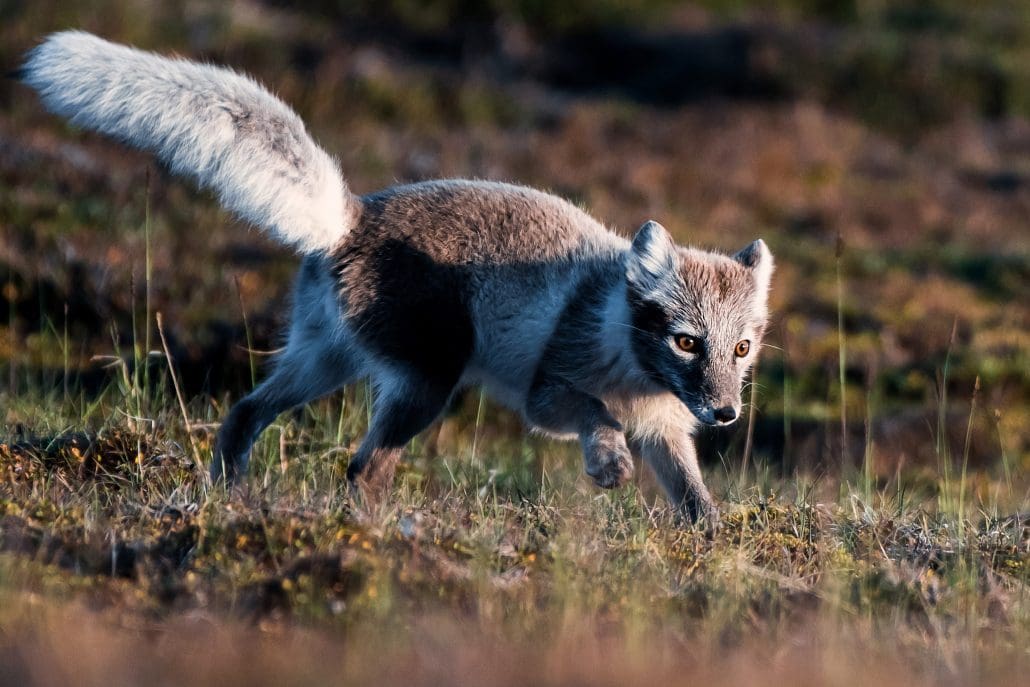
Photo Safari trips give you better chances of spotting the arctic fox. Experienced and professional guides know where to take you to take the most beautiful photos, and to also spot some wildlife. Remember that wildlife is never guaranteed, but you have the best possibility when you go outside with the guide!
Walrus
Walruses are one of the highlights of a summer boat trip. Once hunted almost to disappearance around Svalbard, they have recovered well and now gather at known haul-out sites where dozens pile together on the shore and ice. Seeing a group of these huge, tusked animals up close, from a boat keeping a careful distance, is a memorable part of many summer excursions. They are most reliably seen between May and September.


Seabirds
Birdlife is at its best in summer. From May onward, the cliffs and tundra fill with kittiwakes, Brunnich’s guillemots, little auks, Arctic terns, and puffins, while the little snow buntings are usually the first songbirds back each spring. The large nesting colonies on the sea cliffs are a remarkable sight and sound, and a coastal boat trip will bring you close to them. If birds are your main interest, late June and July are the months to come.


Watching wildlife responsibly
Svalbard’s wildlife is protected, and watching it the right way keeps both you and the animals safe. A few simple principles:
- Keep your distance – use binoculars and a zoom lens, never approach.
- Never feed or try to attract any animal.
- Let the animals set the pace – if your presence changes their behaviour, you’re too close.
- Always follow your guide and the official rules; outside town, an armed guide is required.
Watching photography tips
- Bring a telephoto/zoom lens – you’ll (rightly) be keeping your distance.
- Be patient and ready; the best moments are brief.
- Shoot from the boat with a fast shutter speed to counter movement.
- Never approach or bait an animal for a photo – no shot is worth disturbing wildlife.
Staying with us
For wildlife-focused travellers, the things to do in Longyearbyen often start with getting out into the surrounding terrain or onto the water with someone who knows it well. As a hostel in Longyearbyen, sitting right at the edge of town, we make a comfortable and well-placed base for early starts and long days out. If this is the side of Svalbard that pulls at you, have a look at our rooms and the guided trips that focus on wildlife, the fjords, and the coast.